
The Bus Called Lazarus
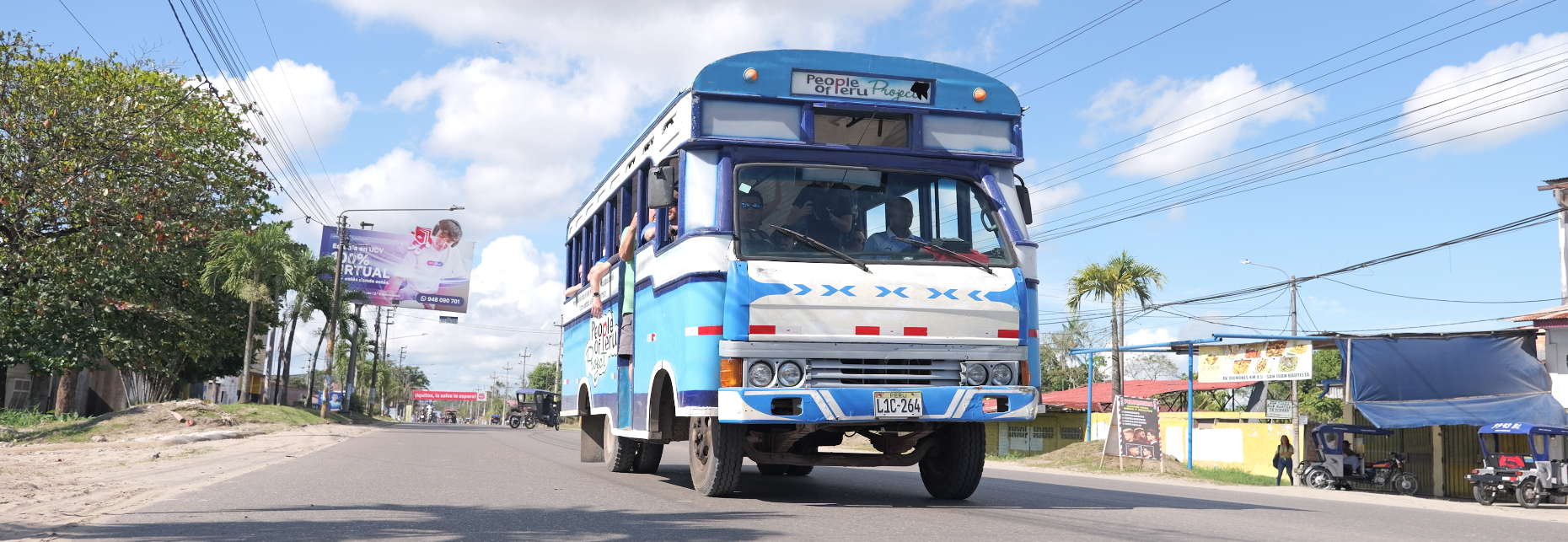
White and blue, with hardwood floors fastened together by bolts and nails and hand-shaped sheets of tin skirting the outside, the old bus has seen a lot. Every inch of it tells a story. It squeaks around corners, rattles over rough roads, and drops into potholes large enough to hide an entire family of tadpoles. Time has weathered its paint, but it still faithfully makes the journey it has made countless times before.
Today is airport day.
Motocars line the roadside, waiting for passengers as the bus pulls into the small airport in Iquitos, Peru. Home to more than 500,000 people, Iquitos is the largest city in the world that cannot be reached by road. Every person—and everything—comes to this place by boat down the Amazon River or by plane.
The bus waits quietly in the small parking lot until the airport doors swing open. Travelers spill outside, their excited conversations filling the air. They climb the wooden steps one by one, filling every seat and eventually the aisle as well. After one final head count, the bus lurches forward. A welcome breeze rushes through the open windows, offering relief from the heavy heat and humidity as another journey begins.
Long before this bus became a familiar sight in Iquitos, it was little more than a forgotten shell. The buses here in Iquitos are all built of wood and tin bolted to steel chassis. This one was worn out, falling apart, and nearing the end of its life. Most people would have considered it beyond saving.
Instead, it was rebuilt.
Hardwood floors and side panels were redone. New single-pane windows were installed in the side and rear windows, and sheets of tin were hammered into shape to form its exterior. The entire body was repainted white and sky blue, and lastly, large logos were painted on all four sides of the bus in big, bold letters: People of Peru Project.
The transformation earned it a fitting name: Lazarus.
Like its biblical namesake, the bus had been given a second chance.
This group of volunteers, like many who have come before them, are here to serve with People of Peru Project.
Founded in the early 2000s by Paul Opp, this organization began after a mission trip to Peru changed the course of his life. Seeing the needs firsthand, he felt called to return and establish a home for young girls who had experienced abuse and neglect—a place where they could find safety, love, and an education. Over the years, that vision has grown into much more. Today, the ministry includes a volunteer center where teams can stay while serving, a free dental clinic providing care to those who could not otherwise afford it, and a surgery center that is in the process of being constructed to begin providing life saving procedures to those who cannot afford this luxury.
Throughout the week, Lazarus faithfully carries each group wherever they are needed. It is never the focus, yet very little could happen without it.
Its driver knows every quirk, and with no power steering, he puts in the work as the bus carries volunteers—sometimes to villages with bags of rice and lentils for distribution to those in great need. Other times, it carries medical teams to remote areas with little access to health care. From Vacation Bible School programs to construction sites and beyond, this bus—often running on little more than a prayer—continues to faithfully serve the people of Iquitos and beyond.
Perhaps the most remarkable part of Lazarus isn't what can be seen from the outside.
Before every volunteer team leaves Peru, they climb aboard one last time with a marker in hand. They search for one small patch of exposed wood among the hundreds of names already covering the ceiling. Year after year, those signatures have accumulated until nearly every inch overhead tells the story of someone whose life was changed through missions.
The goal of People of Peru Project is not only to serve the people of Iquitos but also to touch the hearts of the volunteers who come to help.
People have often asked Paul whether he would rather they donate money or come to volunteer. His answer is always the same:
"Come and volunteer. Then you'll see the need for yourself—and you'll donate anyway."
While financial support is essential, Paul believes the greatest impact comes when someone is willing to give their time, their hands, and their heart. The relationships built, the compassion shown, and the seeds planted through personal service leave an impression that money alone could never accomplish.
And through it all, Lazarus has quietly carried them.
Its paint may now be chipped. The wood bears the marks of thousands of muddy shoes, and its suspension strains with every pothole. Yet every time another group arrives in Iquitos, the driver climbs into the bus with his Bible in hand, neatly tucks it into a small slot in the dash, says a prayer, and the engine comes to life once again.
For more than two decades, this ministry has existed to restore lives through the love of Christ. Along the way, an old bus that was once considered beyond repair has become one of the ministry's most faithful servants.
But perhaps Lazarus represents something even greater than itself. It represents those at People of Peru Project who continue to answer God's call—week after week, year after year—faithfully carrying hope wherever it is needed most.
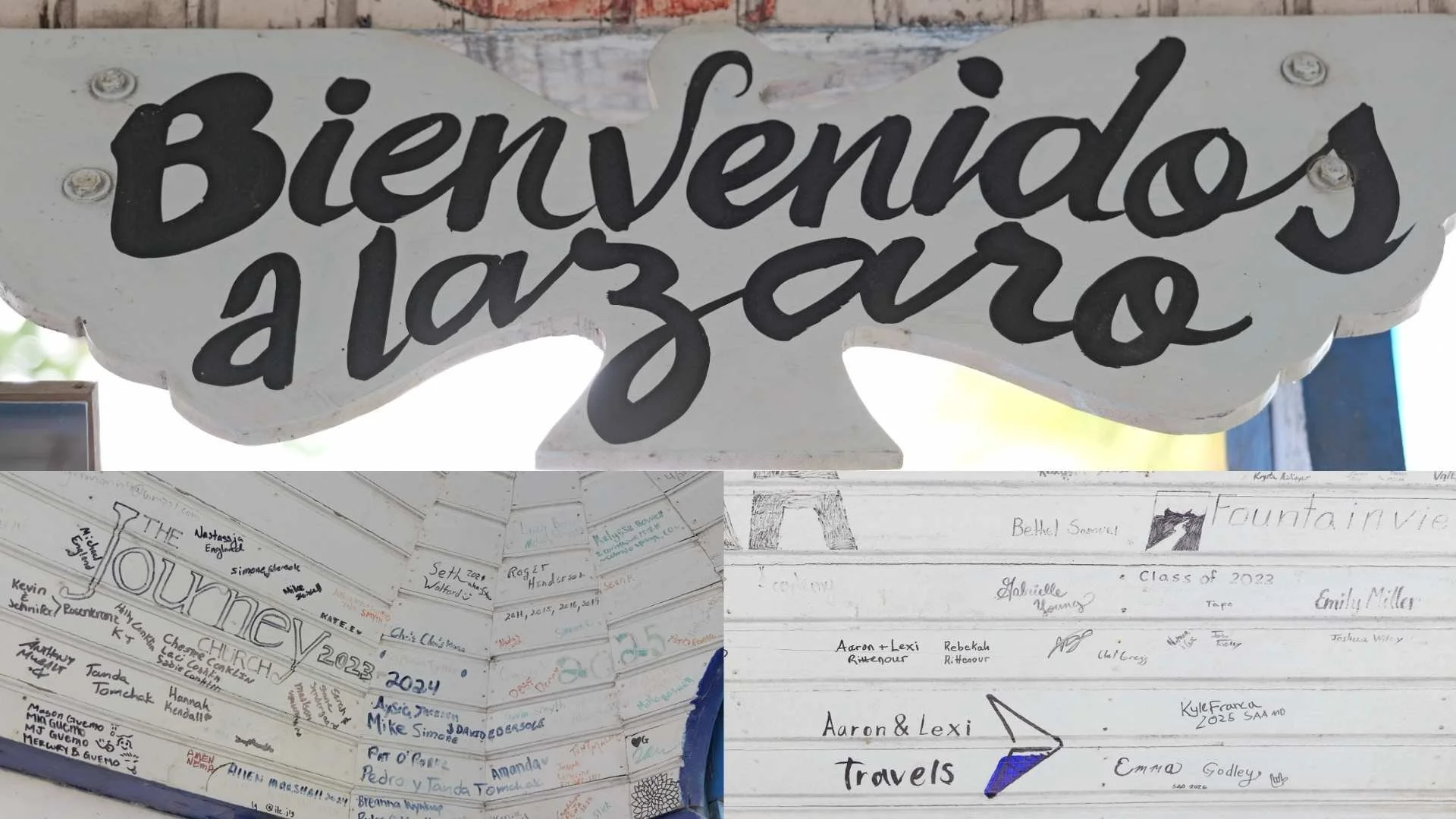
Signatures from inside the bus.